
Running D&D comes down to 3 jobs: prep less, rule fast, and track what changed. If I keep my notes short, my tools close, and my players in focus, the game runs better with less stress. In most groups, 4 table tasks take up most of a DM’s attention: presenting the world, making rulings, tracking combat and NPCs, and keeping players involved.
Here’s the short version:
- Learn the rules that come up most instead of trying to learn every edge case
- Prep situations, not scripts
- Use a simple table setup for initiative, notes, maps, dice, and rule checks
- Start each session with a recap and end with a hook
- Write down rulings, NPC changes, and open threads right after play
- Keep backup material ready like spare names, clues, and monster groups
A lot of DMs overprep. That’s the trap. In play, being consistent matters more than being perfect. Even a short post-session note can cut next-session confusion by a lot, and a 1-page cheat sheet is often more useful than 10 pages of lore.
| Area | What I focus on |
|---|---|
| Rules | Common checks, combat flow, conditions |
| Prep | NPC goals, locations, clues, loose ends |
| Table tools | Initiative tracker, map, dice, note sheet |
| Session flow | Recap, scene setup, rulings, closing hook |
| Between sessions | Consequences, rulings, thread list |
If I treat DMing like a small command center instead of a giant writing project, it gets easier to run and easier to repeat.
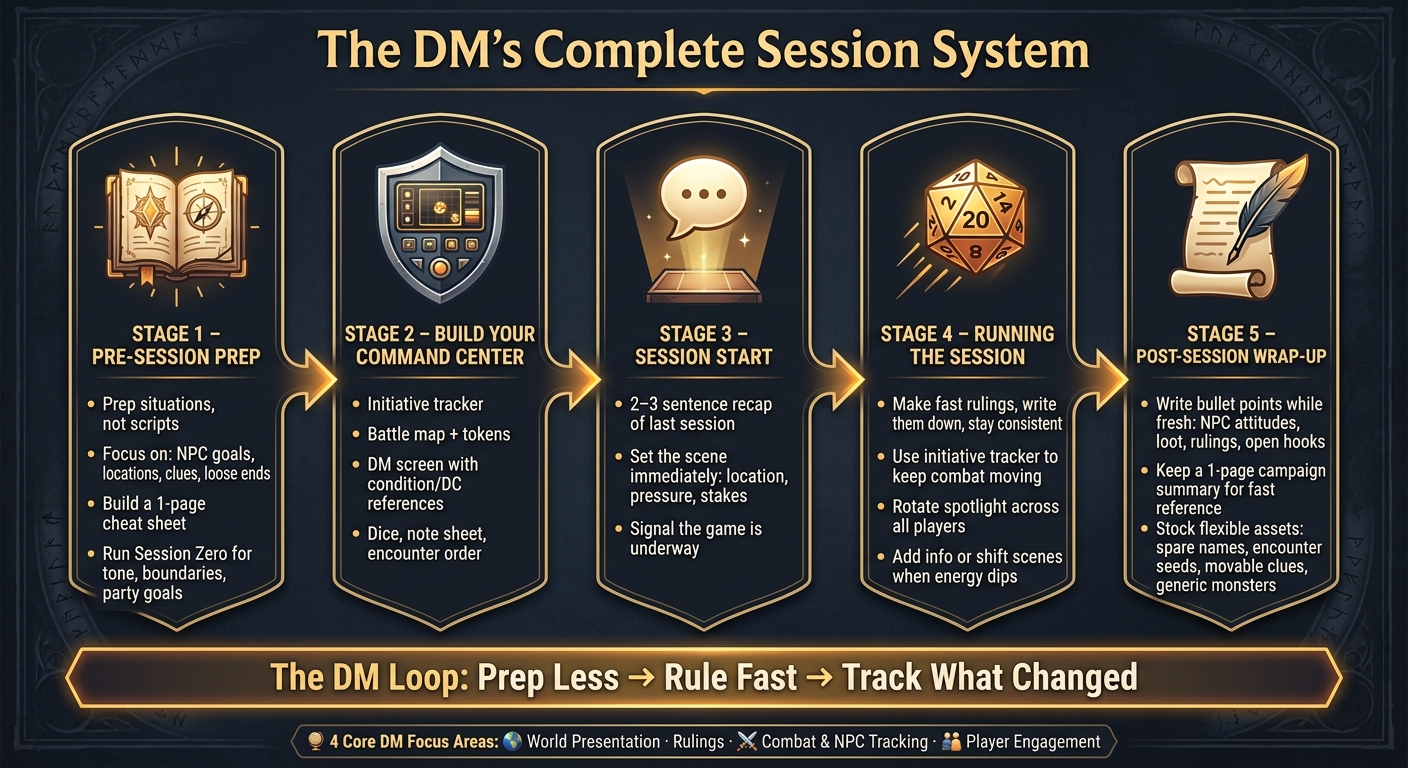
DM Session Flow: From Prep to Post-Session in 5 Stages
How to run D&D - Dungeon Master Guide
sbb-itb-74d578b
Prepare the Game Before Anyone Sits Down
Once the core rules are close at hand, prep only the pieces you can use fast at the table. Good prep is not about writing more. It's about writing the things you'll actually reach for during play.
Choose Your Adventure Format and Prep Only What Matters
Published adventures, one-shots, and homebrew campaigns each need a different kind of prep. The trick is simple: prep what will show up in play.
Focus on the parts that help you run the session without digging through pages of notes. That usually means locations, NPC goals, clues, likely encounters, and unresolved threads. Think in terms of situations and pressure points, not locked-in player choices. Players will zig when you thought they'd zag. That's normal. Notes built around what the world is doing stay useful even when the party goes off-script.
That only works if your notes are easy to scan in the moment. If you can't find it in a few seconds, it might as well not be there.
Run a Session Zero to Set Tone, Boundaries, and Party Goals
Session Zero sets the campaign's operating rules before the first scene starts. This is where you line up tone, boundaries, party goals, and the reason the characters stick together.
Have players finish their characters within the agreed limits before Session 1. Then write those choices into your campaign notes. If you don't, those early agreements can vanish fast once the game gets rolling.
Organize Campaign Notes for Fast Use at the Table
Good notes connect prep to live rulings. Build notes you can search during play, not notes that look nice and slow you down.
A simple setup helps:
- Static facts for things that don't change much
- Session logs for what happened at the table
Before each session, pull the most relevant NPCs, locations, and unresolved hooks into a short cheat sheet you can glance at in the middle of a scene. Archive anything that's been resolved so your active notes stay clean. Tag rulings and consequences with the session or player choice that caused them.
For NPCs, even a plain format like Name / Role / Goal / Location makes a big difference. You can scan it in seconds and get back to the game.
Build a DM Command Center That Supports Live Play
A DM command center puts your core tools within easy reach, so the game keeps moving instead of getting stuck on table management.
DM Tools You Need for Initiative, Notes, Maps, and Dice
A DM command center should deal with the table’s most common slowdowns: initiative, tracking, mapping, and rules lookups. An initiative tracker keeps combat order in plain view, so you’re not asking “who’s next?” every round. Condition markers next to miniatures or tokens make it easy to spot who’s affected without pausing to check rules again.
A battle map plus tokens or miniatures gives everyone a shared sense of space during encounters. It helps the table see what’s happening at a glance. Keep a small rules strip nearby for conditions, DCs, and turn-order reminders. That kind of setup helps combat stay fast and easy to follow.
This works even better when your screen turns all of those pieces into one fast-reference panel.
How to Use a DM Screen to Hide Information and Surface Key Rules
A DM screen hides secrets while keeping the rules you use most right in front of you. It can hold monster stats, encounter notes, NPC names, condition references, and DCs close at hand without showing any of it to the table.
What sits behind the screen matters just as much as the screen itself. A printed encounter order, a session note card, and a condition reference sheet can turn a plain screen into a quick command center. Modular and tome-style setups offer a premium option over standard screens, with built-in features and a cleaner workspace.
If you want those same functions in one portable build, an all-in-one tome pushes that idea further.
All-in-One Setups: WyrmCodex as a Portable DM Command Center
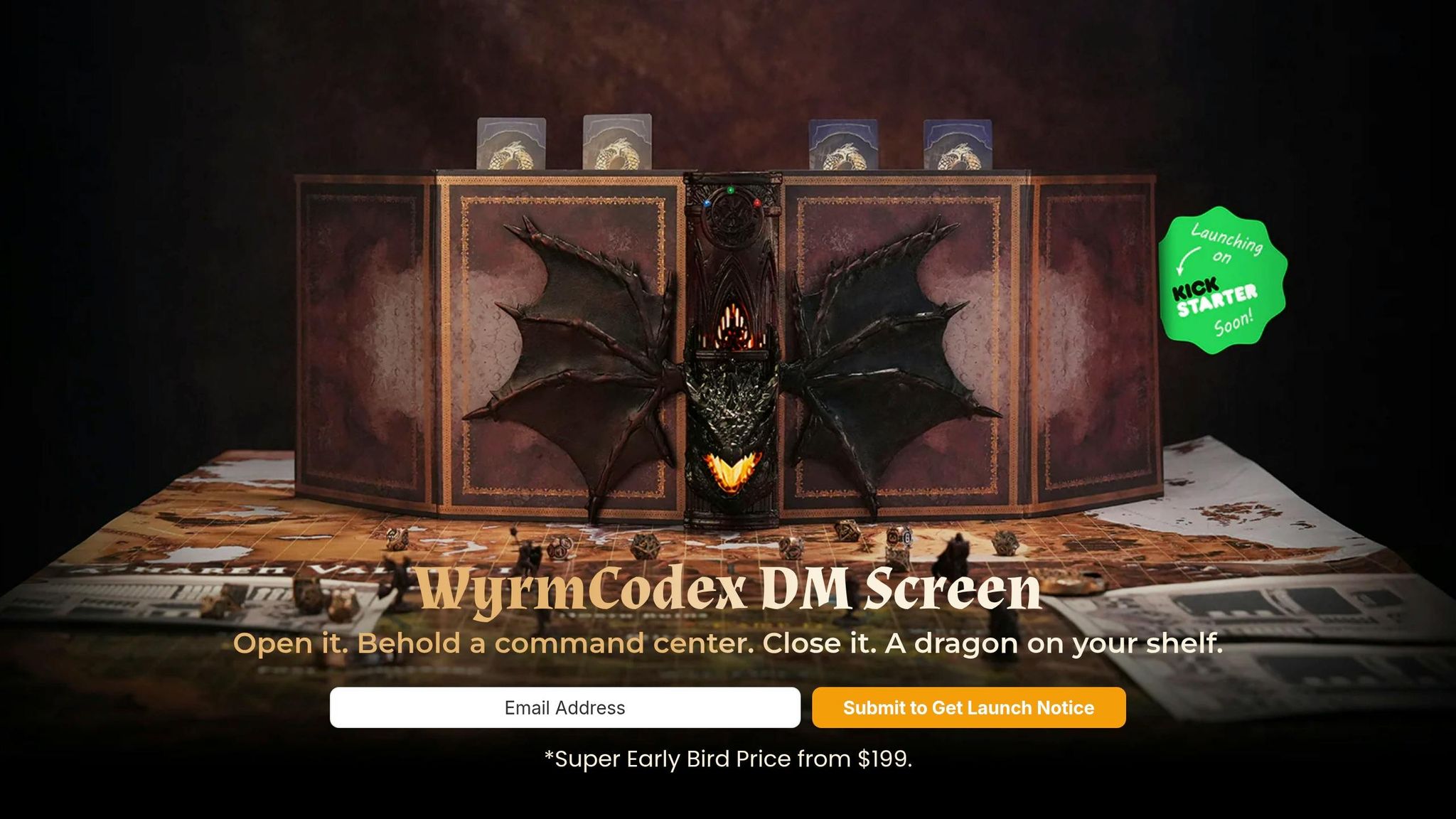
All-in-one command centers bring several tools into one footprint. WyrmCodex takes a different path from standard screens or modular panel systems. It’s built as a dragon-forged tome - a foldable book that opens into a full DM command center.
Inside, the setup pulls key tools into one place:
- An integrated LED dice tower keeps dice contained in one spot
- Magnetic command panels let you attach initiative cards, reference sheets, and encounter notes
- A refillable ring-bound campaign journal keeps session notes, rulings, and NPC lists together with the screen
The whole setup folds shut and carries like a book, which makes it a practical pick for DMs moving between tables.
It brings your most-used tools together, so you spend less time dealing with clutter and more time running the game.
Run the Session: Pacing, Rulings, and Player Management
With your notes, screen, and trackers close by, the next step is running the session smoothly at the table. Once play begins, the DM's job changes a bit. Now you're setting the pace, making fast calls, and making sure every player stays part of what's happening.
How to Structure a Session from Recap to Closing Hook
Start each session with a short recap of where the party left off. Keep it to two or three sentences. That's usually enough to get everyone back on the same page and signal that the game is underway.
Then set the scene right away: where the characters are, what's in front of them, and what kind of pressure they're under. That kind of clear opening cuts down on dead air and gets players into the fiction fast.
End each session with a hook that points ahead. Maybe it's a threat on the horizon, a question no one can answer yet, or an NPC making their next move. Give players something to sit with before the next game.
Make Quick Rulings and Keep Combat Moving
When a rules question pops up in the middle of play, make the call and move on. A fast ruling that keeps the session moving is usually better than stopping to hunt for the exact page. Write the ruling down, check it after the session if needed, and stay consistent from there.
In combat, use your initiative tracker so turns move along without the usual "Who's up next?" delay. Call on each player by name, keep monster turns short and firm, and show conditions in a way everyone can see. The table should always know the state of the fight.
Manage Spotlight, Roleplay, and Table Culture
Rotate spotlight on purpose. If one player has carried the last two scenes, look for a way to bring someone else in. That could be a direct question, a situation tied to their backstory, or a choice that lands in their hands alone. Every player should feel like the story sees them.
During roleplay, let scenes breathe, but pay attention when the energy starts to dip. When that happens, add new information or shift the scene. You want the table to keep moving without stepping on moments that matter.
Stick to the table's social contract from Session Zero. If the tone or boundaries start to drift, address it early and plainly. Small course corrections are much easier than big ones.
What you track between sessions shapes how smoothly the next one begins.
Keep the Campaign Going Between Sessions
Track Consequences, Rulings, and Open Story Threads
When the session ends and everyone heads out, take a minute to write down what changed while it's still fresh in your mind.
Focus on the stuff that will matter next time: NPC attitudes, treasure the party picked up, loose story hooks, and any rulings you made on the fly. You don't need a giant write-up. A few bullet points are enough.
It also helps to keep a one-page campaign summary next to your full session log. Use it for the things you need to find fast, like names, places, and open threads. That way, you're not digging through old notes trying to remember who owed the party a favor or which town had the suspicious innkeeper.
Prepare for Off-Script Choices Without Overprepping
You don't need to map out every possible player choice. That's a fast road to wasted prep.
Instead, keep a small pool of flexible assets ready for the moments when the party goes off-script. Your session log will show you what needs to carry forward. Then you can stock a few easy-to-reuse pieces, like:
- Spare NPC names
- Reusable encounter seeds
- Movable clues
- Generic monster groups
From there, think about what the world does next. Factions make moves, NPCs react, and consequences show up. So when players wander somewhere you didn't expect, you're not scrambling to invent a whole new game on the spot. You're just moving the campaign forward.
Conclusion: The Habits and Tools That Make DMing Smoother
Good DMing runs on a simple system: know the core rules, prep only what you'll use, keep your tools close, and track what changes between sessions.
Those habits make each game faster, cleaner, and easier to run.
FAQs
How much prep is enough for one session?
For a typical four-hour session, 30 to 60 minutes of focused prep is usually enough. If you're a new Dungeon Master, don't sink hours into scripted scenes. Players almost always zig when you expected them to zag, and those scripts fall apart fast.
A better move is to prep flexible bullet notes instead:
- a strong opening scene
- three to five major scenes
- key NPC details
- one adaptable combat encounter
When your prep time is up, stop. If something doesn't get used, save it and bring it back later.
What rules should a new DM learn first?
You don’t need to memorize every rule before your first session. Start with the core mechanics in the Player’s Handbook, Dungeon Master’s Guide, and Monster Manual. Put your attention on combat, skill checks, and the action economy first.
If a rule gets fuzzy during play, make a sensible call and keep things moving. You can check the exact wording after the session. This Rule of Cool mindset puts table momentum and player engagement ahead of perfect rules recall.
How do I handle players going off-script?
Treat your prep like a box of parts, not a fixed path. If you planned an ambush or a key location, move it to wherever the players decide to go instead of dragging them back to what you had in mind.
Put your energy into situations, stakes, and modular pieces rather than scripted branches. That way, when the group goes off in a direction you didn’t expect, you can still keep the game moving. You can invent a shop, an NPC, or a small detail right at the table, and their choices still get to steer what happens next.