
If you want the short answer: wood feels best at a home table, metal works best for magnets and rigid panels, and leather is the easiest to carry and gives the most book-like look.
I’d pick based on 5 simple checks: weight, wear over time, surface feel, table look, and support for add-ons. Across those points, each material wins in a different way. Wood brings the strongest room presence, metal stays flat and handles magnetic parts well, and leather feels softer in hand and packs more easily.
A few key takeaways:
- Wood: heavier, warmer, and great for a fixed setup
- Metal: firm, clean, and well-suited for magnetic use
- Leather: lighter, softer, and shaped by a tome-style look
- Genuine leather changes with use; synthetic leather stays more even
- Hybrid builds mix materials when one alone does not cover everything
Quick Comparison
| Material | Weight & Carry | Wear Over Time | Feel in Hand | Table Look | Add-On Support |
|---|---|---|---|---|---|
| Wood | Heavier; less travel-friendly | Ages well; can build patina | Warm, textured | Strong, grounded look | Good with the right hardware |
| Metal | Easy to move; holds shape well | Resists warping; scratches show more | Cool, hard surface | Clean, rigid look | Very good for magnets |
| Leather | Often the easiest to pack | Genuine leather changes; synthetic stays even | Soft, warm touch | Book-like, atmospheric | Often part of hybrid builds |
One useful detail: this is not just about looks. In day-to-day use, weight affects setup, surface finish affects handling, and material choice shapes how your screen works as a command center. That’s the main point of this comparison.
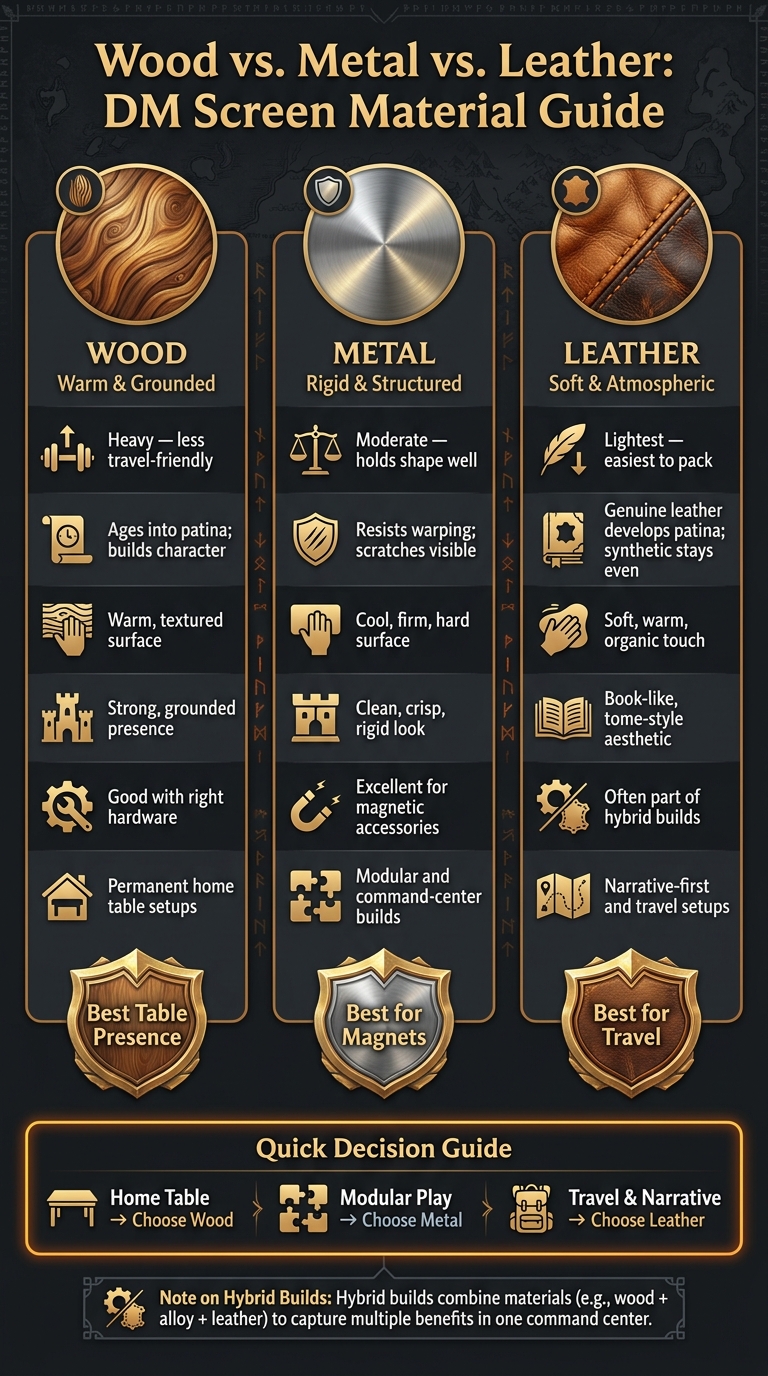
Wood vs. Metal vs. Leather DM Screen: Material Comparison Guide
This DM Screen Changes Everything... But Is It Worth It?
sbb-itb-74d578b
Wood DM Screens: Warm Finish, Strong Table Presence, Added Bulk
Wood stands out for one simple reason: it feels at home on the table. It adds warmth, has enough weight to stay put, and gives off a steady presence. It looks like part of the setup, not some throwaway add-on.
The downside is the extra bulk. Hardwood takes more effort to move around. But that same weight helps during long sessions, because the screen stays firmly in place while your panels, notes, and add-ons remain arranged around it.
Weight, Stability, and Long-Term Wear
A well-finished hardwood screen tends to age nicely. Over time, it develops patina, which gives it more character instead of making it look worn out. That matters if you want something that holds up through years of regular play.
Finish and Surface Character
Satin or hand-finished surfaces bring out the grain and let that patina deepen over time. You can see and feel the material, which gives the screen more personality at the table.
And when it has the right hardware, wood can handle modular inserts without losing that crafted look.
Wood leans into warmth and table presence. Metal, by contrast, leans more toward rigidity and ease of transport. That extra bulk is still wood's main drawback, which is why metal is the next material to look at.
Metal DM Screens: Rigid Structure, Magnetic Strength, Colder Feel
Where wood brings warmth, metal brings structure. It’s the rigid pick: stable, flat, and able to hold its shape through regular use.
Metal doesn’t warp easily from humidity or temperature swings, so it stays steady over years of play.
Portability, Impact Resistance, and Upkeep
Metal handles repeated packing, setup, and the occasional table bump without slipping out of alignment. That stiffness helps panels stay lined up and keeps accessories in place. It’s also easy to clean.
That said, metal tends to show wear more clearly than wood. Scuffs, scratches, and marks can stand out faster, which matters if you want your setup to keep a polished look.
Table Feel, Noise, and Magnetic Utility
At the table, metal feels cool and firm to the touch. That makes it a good fit for modular command-center setups, especially if you rely on magnetic accessories and modular panels.
There’s a tradeoff, though. Metal can feel colder and more mechanical than other materials. If you want a screen with a softer, more book-like presence, that difference stands out fast.
| Property | Metal Strength | Metal Limitation |
|---|---|---|
| Rigidity | Most rigid; stays flat and stable | Firmer, less yielding feel than wood or leather |
| Warping Resistance | Resists humidity and temperature changes | None specific to warping |
| Modular Support | Works well with magnetic accessories and modular panels | Requires compatible magnetic pieces |
Leather shifts the feel again, trading metal's hard edge for a softer, more book-like presence.
Leather DM Screens: Soft Handling, Tome Aesthetic, Surface Character
Leather changes how a DM screen feels the moment you pick it up. It makes the screen softer in the hand and shifts the whole vibe from a set of panels to something closer to a tome. If metal gives you structure, leather gives you mood. It’s the material most likely to make a setup feel like an ancient book sitting open at the table.
Comfort, Portability, and How Leather Ages
Leather-wrapped builds are easy to carry and pleasant to handle. The softer outer layer feels less rough during travel and repeated setup, which can make a difference if you bring your screen to every session.
Genuine leather and synthetic leather age in very different ways. Genuine leather develops a patina with use, and many DMs like that worn, lived-with look because it adds more personality over time. Vegan leather and leatherette stay more uniform and are easier to wipe clean, but they don’t pick up that same broken-in feel.
| Property | Genuine Leather | Vegan Leather / Leatherette |
|---|---|---|
| Comfort & Handling | Soft, warm, organic feel | Softer than metal; consistent texture |
| Aging | Develops patina and character over time | Holds a consistent appearance; minimal change |
| Visual Style | Rich, arcane, tome-like | Clean, uniform finish; less variation |
Why Leather Works Well in Tome-Style Command Centers
Leather fits naturally when a DM wants a setup that looks like a spellbook or old manuscript. It brings that arcane, scholarly look without much effort, which is a big part of the appeal.
Hybrid builds can take that idea even further. WyrmCodex leans into it with a dragon-tome form that blends wood, alloy, and leather-like finishes into one command center. That mix of comfort, aging, and presentation is often what shapes the choice when someone is picking a premium DM screen material.
Wood vs. Metal vs. Leather: Choosing the Right Material for Your DM Setup
Once you look at the tradeoffs, the choice gets pretty simple: pick the material that fits the way your screen actually gets used, whether you buy one or build your own. A material can sound great on paper, but what matters is how it performs at your table, during prep, and on game night.
Best Material by Use Case: Home Table, Travel, and Modular Play
| Material | General Feel | Good Fit For |
|---|---|---|
| Wood | Warm, grounded, substantial | A centerpiece home table |
| Metal | Crisp, structured, rigid | A rigid-framed build with modular needs |
| Leather | Soft, tactile, atmospheric | A tome-like, narrative-first setup |
At a home table, wood has the strongest presence. It feels solid, settled, and built to stay put. If you want your DM screen to feel like part of the room, wood does that better than the other two.
For modular play, metal makes a lot of sense. It brings a rigid frame and works well when you want a build shaped around swap-in parts, add-ons, or a more structured command setup.
Leather leans in a different direction. It feels soft in the hand and has that atmospheric, book-like look that fits a narrative-first setup. If you want something that feels more like a prop than a panel, leather is hard to ignore.
For travel, leather-wrapped builds are the lightest and easiest to pack. Metal handles repeated packing and impact better than the others. Wood is the least portable of the three, but at a permanent setup, it pays you back with the strongest table presence.
Hybrid Builds and Final Takeaway
Some command centers mix materials to get more than one upside. That approach makes sense when a single material doesn't do everything you want. WyrmCodex takes that route with a hybrid dragon-tome design built around an integrated command center.
When weight, wear, feel, and command-center function all matter, the right pick is the one that matches how you run your game.
FAQs
Which material lasts longest?
Solid hardwoods like walnut, maple, and oak are often seen as long-lasting picks. Their weight and strong structure help them resist warping and sagging, even after years of use.
High-end metal-core and premium leather designs are built to last, too. That said, lifespan still comes down to two things: how well the piece is made and how well it's cared for.
Is leather durable enough for regular travel?
Yes. Leather is a strong pick for regular travel because it holds up well and bends without losing its shape. High-quality leather or premium leatherette - especially when paired with a metal core - is made for long-term use by Game Masters moving between tables and conventions.
Compared with thinner materials that can warp or sag, leather-bound options give you a sturdy outer shell that helps keep tools and notes secure.
When does a hybrid build make sense?
A hybrid build is a smart pick for Game Masters who want both table presence and day-to-day usability. By mixing materials like leather and wood, or using metal cores with organic outer layers, you get a setup that feels premium in your hands while still being easy to live with over time.
This kind of build works especially well if you switch between RPG systems, run combat-heavy sessions, or want a polished setup that can take regular use without wearing down fast.